Longevity in Astrology: Hyleg & Alcocoden
Assessing longevity in traditional astrology: Hyleg, Alcocoden, luminaries, houses I and VIII. A concrete method and indicators to cross-reference.

How astrology observes longevity: the essential indicators
The question of life longevity is one of the oldest and most delicate in astrology. It is never read from a single clue: it is observed through a cluster of cross-referenced indicators — the Hyleg (the giver of life), the Alcocoden (the giver of years), the condition of the luminaries, the quality of house I, and the nature of the aspects received. This guide shows you how to read these signs rigorously, without falling into mechanical prediction.
Giver of life
The Hyleg
Giver of years
The Alcocoden
Key house
House I & VIII
Before getting into the technique, one thing must be understood: longevity does not depend on a single planet. It rests on the overall solidity of the chart. A well-placed Hyleg that is afflicted by the malefics can indicate a strong but tested vitality. A weak but supported Hyleg can give fragile health but a decent lifespan. It is all a matter of balance.
1) The Hyleg: the vital point of the chart
The Hyleg (also called the apheta or giver of life) is the point of the chart that carries the vital force. It is the first thing observed when judging vitality, resilience and potential lifespan.
How to determine it?
Traditional order of selection.
- ✦By day: first look at the Sun if it is well placed (houses I, VII, X, XI, IX).
- ✦By night: first look at the Moon under the same conditions.
- ✦Otherwise, take the Ascendant, then the Part of Fortune.
What it reveals
The quality of the Hyleg = the quality of the terrain.
A strong Hyleg (in dignity, well aspected, in an angular house) indicates a generous vital capital.
An afflicted Hyleg (square or opposition from Mars or Saturn, combust, in fall) signals fragilities to watch, without thereby condemning the lifespan.
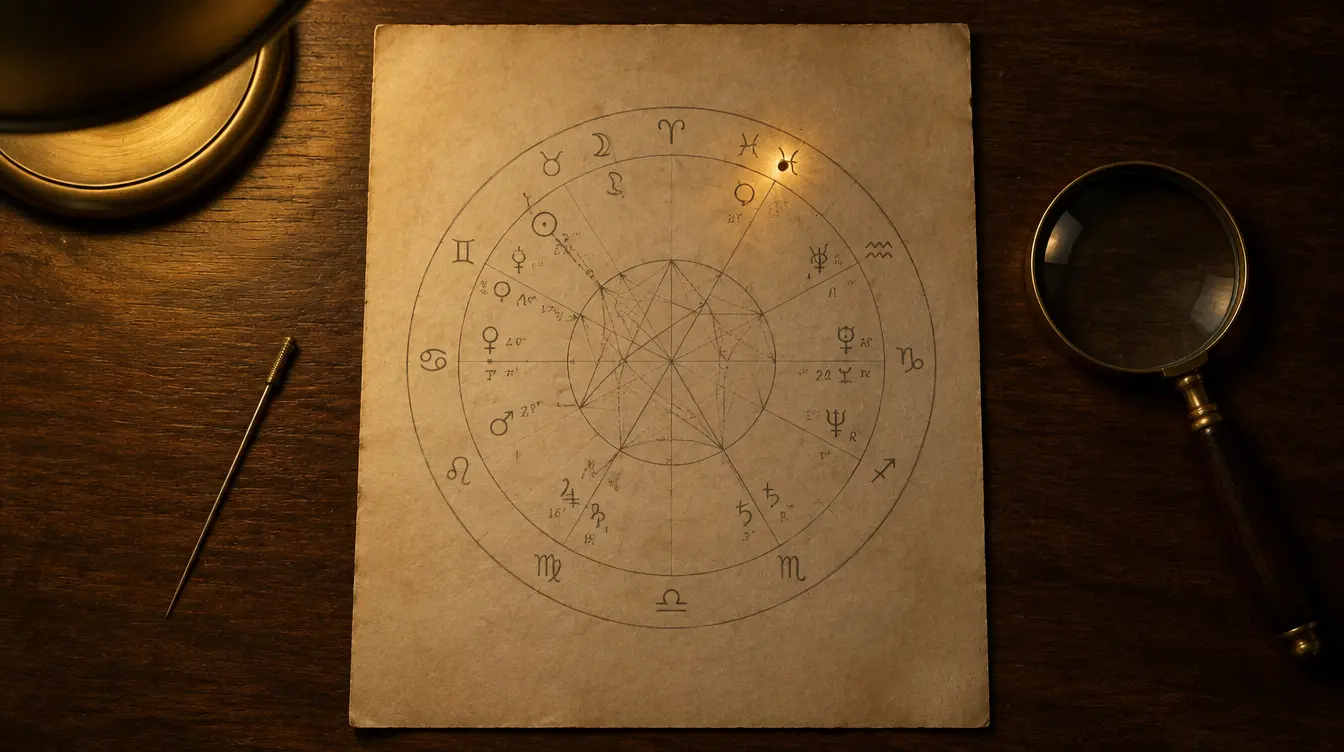
2) The Alcocoden: the giver of years
Once the Hyleg is found, you identify its ruler: this is the Alcocoden. According to tradition (Ptolemy, Bonatti, Lilly), it grants a number of years according to its essential dignity.
3) The condition of the luminaries: Sun and Moon
Beyond the Hyleg, the Sun and the Moon are the two great indicators of vitality. The Sun carries the underlying energy, the vital breath; the Moon carries the body's regulation, the rhythms, the immunity, the moods.
Strong Sun
Positive signs.
The Sun in Leo, in Aries (exaltation), well aspected by Jupiter or Venus, in an angular house: signals a deeply anchored fundamental vitality, a good capacity for recovery.
Strong Moon
Positive signs.
The Moon in Cancer, in Taurus (exaltation), well aspected, free of combustion: indicates a stable bodily regulation, good defences, balanced sleep and digestion.
Afflicted Sun
Signs calling for vigilance.
The Sun in Aquarius (detriment), Libra (fall), besieged between Mars and Saturn, square or opposed to the malefics: may signal a lower underlying energy, or cardiac tensions to watch.
Afflicted Moon
Signs calling for vigilance.
The Moon in Scorpio (fall), Capricorn (detriment), combust, poorly aspected by Saturn or Mars: may indicate immune, digestive or emotional fragilities to support.
4) House I: the physical constitution
House I is the house of the body, of the constitution, of the temperament. Its quality determines the base on which the Hyleg can rely.
What to observe
- ✔The sign of the Ascendant: it gives the complexion (hot/cold, dry/moist).
- ✔The ruler of the Ascendant: its dignity, its house, its aspects.
- ✔The planets in house I: their nature strengthens or weakens the body.
- ✘Mars or Saturn in I, poorly disposed: tension, accidents, a more fragile structure.
5) House VIII: trials and ends of cycles
House VIII is traditionally the house of crises, of deep transformations and, in the classical reading, of the end of life. It does not predict death, but it signals the type of trials a person might go through and the way they can regenerate from them.
Supported house VIII
Cusp in a stable sign, well-placed ruler, harmonious aspects: strong capacity for regeneration, a smoother passage through crises.
Afflicted house VIII
Ruler in fall, malefics poorly disposed in VIII: more intense or recurring crises, heightened vigilance regarding prevention.
6) Saturn: the planet of duration
Saturn is the planet that structures time, the bones, duration. A strong Saturn (in Capricorn, Aquarius, Libra) that is well aspected often signals a capacity for endurance and a structural longevity. A fragile Saturn (in Aries, Cancer, Leo) or one that is afflicted may instead indicate bone, joint or resilience limits.

The complete method for assessing longevity in a chart
Synthesis: cross-reference the clues, never isolate one
Longevity in astrology is a reading of the terrain, not a prediction. A strong Hyleg, a well-dignified Alcocoden, supported luminaries, a solid house I and a structured Saturn outline a terrain of lasting vitality. Conversely, several afflicted clues call for more prevention — a healthy lifestyle, medical follow-up, stress management.
FAQ — Longevity and astrology
Can you read the age of death in a chart?
No. Serious astrologers refuse this kind of prediction. You read a quality of vitality and more sensitive periods, never a date.
Is the Sun enough to judge vitality?
No. The Sun is central, but it must be cross-referenced with the Moon, the Ascendant, house I and the quality of Saturn to get a complete picture.
What if my chart shows fragilities?
See it as preventive information: take care of your lifestyle, sleep, diet, medical follow-up. Astrology never replaces medicine.
Do transits play a role?
Yes. The major transits of Saturn, Uranus and Pluto over the sensitive points of the chart often mark pivotal periods to be handled with attention.