NeptuneSymbolism & influence in astrology
Family
Transpersonal planet
Revolution
165 years
Domicile
Pisces
Definition
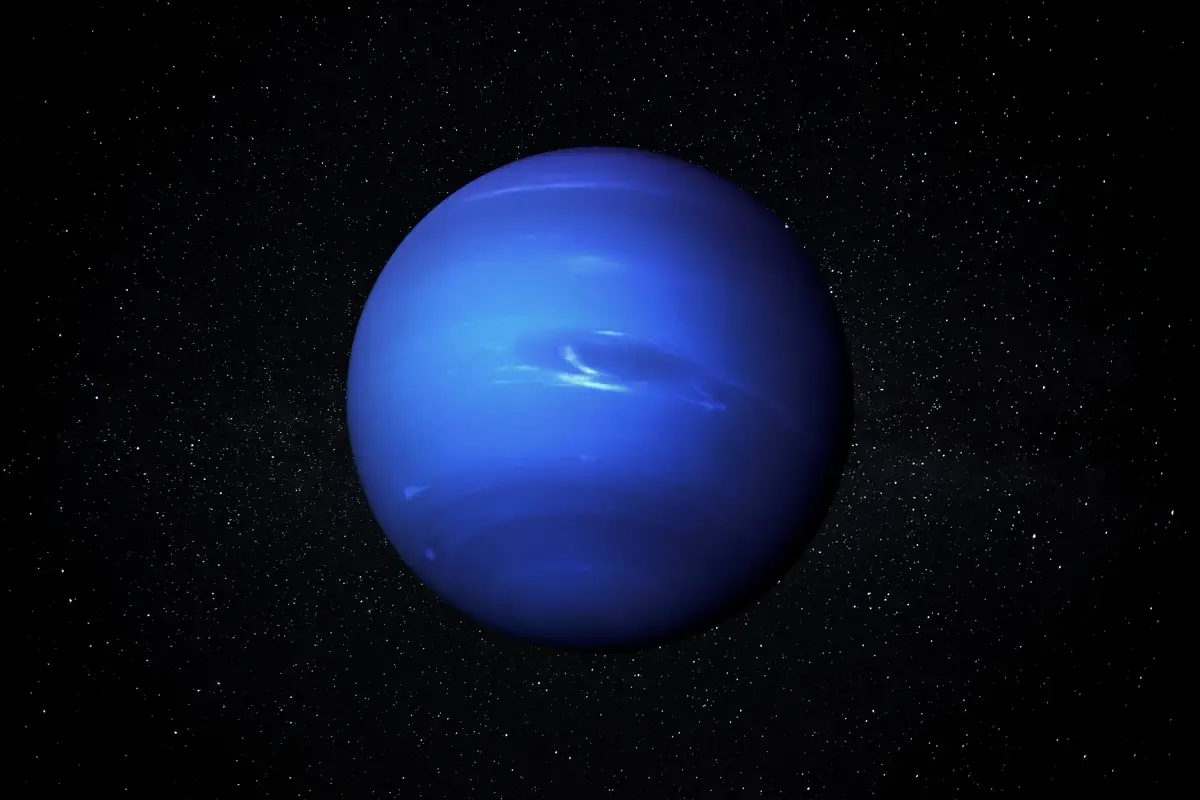
In astrology, Neptune is a transpersonal planet planet whose symbolic function is linked to To inspire, to dissolve, to connect, to sensitise, to open to subtle dimensions, to broaden perception, to make borders fluid, to awaken the imaginary, compassion and the quest for an absolute.. Its domicile is in Pisces.
Neptune in astrology is much more than a mere celestial body in your natal chart. What is its essential function? How do you interpret it in each sign and each house? This encyclopedic guide to Neptune gives you the keys to understanding its symbolism, its major aspects and its concrete influence in your life.
What is the archetype of Neptune in astrology?
"Neptune is the planet of inspiration, dissolution, the imaginary, subtle sensitivity and openness to the invisible. In astrology, it represents what goes beyond the usual contours of the ego, dissolves overly rigid borders and connects being to vaster, vaguer, more mysterious dimensions. It symbolises compassion, the ideal, resonance, intuition, the mystical impulse, but also confusion, illusion and the loss of bearings when the real is no longer sufficiently held."
Symbol
The ocean, the veil, the mist, the mystic, the visionary artist
Principle
Dissolution, intuition, ideal, compassion, the imaginary
Polarity
Feminine
Element
Water (via Pisces)
Quality
Mutable (via Pisces)
Domicile
Pisces
Exaltation
Cancer
Exile
Virgo
Fall
Capricorn
The logic of dignities
In Pisces, Neptune is at home: there it fully expresses its nature of oceanic sensitivity, intuition, compassion, reverie and openness to the subtle.
In Cancer (exaltation), it amplifies affective resonance, the inner imaginary, sensitive memory and the capacity to welcome the living with gentleness.
In Virgo (exile), precision, detail, the need for method and the will to clearly distinguish things thwart its logic of fusion, vagueness and global inspiration.
In Capricorn (fall), structure, control, the rigour of the real and the necessity of clearly materialising forms limit its impulse of dissolution, ideal or reverie.
Genesis and origins of Neptune
Neptune represents, in the natal chart, the function of inspiration and dissolution. Where it is found, life seeks to make borders more permeable, to open being to finer, vaster or less immediately rational dimensions.
It symbolises subtle sensitivity, receptivity, porosity, the imaginary, the ideal, compassion, diffuse faith, dream, mystery and everything that escapes the overly rigid contours of the mind or the ego.
Neptune acts like an inner sea: it bathes, imbues, envelops, sometimes troubles, often inspires. It does not cut like Mars, does not structure like Saturn, does not awaken like Uranus. It dissolves, connects, suggests, imbues.
In a chart, it shows where one is particularly sensitive, inspired, intuitive, porous or idealistic, but also where one can lose oneself, project, confuse, flee, let oneself be lulled by an image or a hope without sufficient anchoring.
In a spiritual perspective, Neptune corresponds to the need to transcend separation, to connect to something vaster than oneself, to commune with an ideal, a beauty, a faith, an inner music or an invisible dimension.
In a psychological perspective, it evokes the permeability of the ego, the fantasy life, the capacity to dream, to imagine, to feel deeply, but also the risk of identity blurring or of confusion between desire, fear and reality.
Neptune is not only vagueness: it can be grace, inspiration, beauty, charity, art, inner vision, presentiment, subtle healing and intelligence of the invisible bond.
Well lived, it brings compassion, imagination, sensitive depth, intuition, creative inspiration and spiritual openness. Poorly lived, it produces illusion, flight, dependence, idealisation, self-deception or the dissolution of bearings.
Neptune and the human psyche: strengths and shadows
Low level
- Confusion
- Flight from the real
- Excessive idealisation
- Dependence
- Loss of limits
Middle level
- Sensitivity
- Imagination
- Receptivity
- Search for an ideal
- Openness to the subtle
High level
- Compassion
- Deep inspiration
- Fitting intuition
- Inner faith
- Subtle presence
- Capacity to connect and soothe
Strengths and potentials
- Intuition
- Compassion
- Imagination
- Inspiration
- Subtle openness
Shadow zones
- Vagueness
- Illusion
- Escapism
- Confusion
- Dependence
- Idealisation
Alignment
- Inspires with delicacy
- Feels without losing itself
- Connects
- Soothes
- Perceives the subtle with accuracy
In excess
- Dissolves into the other or into an ideal
- Flees the real
- Projects
- Confuses intuition and fantasy
- Lets itself be overwhelmed
In deficit
- Drily rational
- Difficulty dreaming
- Weak listening to the subtle
- Little porosity to the symbolic
- Deficit of inspiration
Neptune, the father and authority
The father and authority
- Neptune often represents a vague, absent, idealised, sacrificial or hard-to-grasp authority.
- It indicates the way one projects spiritual, affective or imaginary expectations onto an authority figure.
- It also shows how one can become an inspiring, soothing or subtle presence oneself, but sometimes hard to pin down.
In daily life
In daily life
- Neptune manifests in the way of feeling the atmosphere, of being influenced by what is not always visible or clearly formulated.
- It appears in the imaginary, the need to dream, sensitivity to music, art, symbols, atmospheres and the suffering of others.
- It influences the relationship to limits, to faith, to the ideal, to fusion, to solitude, to escape or to the need to connect to something greater than oneself.
- It acts in the way of perceiving without necessarily explaining, of loving without always distinguishing, of believing, of projecting or of letting oneself be traversed.
In which areas of life does Neptune act?
How the body activates the great areas of life.
Body
- Fluids
- Lymphatic system
- Sleep
- Diffuse sensitivity
- Altered states of consciousness
- Bodily receptivity
Social
- Artists
- Mystics
- Subtle healers
- Poets
- Figures of compassion or sacrifice
- Elusive or inspiring beings
Love
- Affective fusion
- Idealisation
- Compassion
- Unconditional or imaginary love
- Need for a soul bond or deep resonance
Work
- Art
- Music
- Cinema
- Spirituality
- Care
- Help
- Fields linked to image, dream, inspiration or the subtle
Authority
- A vague relationship to hierarchies
- Need for inspiration rather than domination
- Distrust of overly hard frameworks
- Diffuse, inspiring or sacrificial authority
Success
- Inspired success
- Subtle radiance
- Invisible influence
- Creation of sensitive worlds
- Impact through resonance more than through force
Spiritual
- The mystical
- Faith
- Transcendence
- Compassion
- Unity
- Dissolution of separations
Neptune strong, weak or afflicted: what differences?
The body strong
- Great intuition
- Compassion
- Inspiration
- Subtle sensitivity
- Spiritual openness
The body weak
- Lack of imaginary
- Little symbolic receptivity
- Weak listening to the subtle
- Difficulty entering faith or reverie
The body afflicted
- Illusions
- Flight
- Confusion
- Dependences
- Excessive idealisation
- Loss of bearings
Neptune in the 12 signs of the zodiac
The influence of the body across the twelve signs.
aries
Impulsive and visionary inspiration"Neptune in Aries colours inspiration with momentum, boldness and active intuition. Here, the ideal wants to embody itself in a movement, an impulse, an inner conquest or an inspired assertion. The person can be carried by sudden calls, dreams of beginning, an acting faith, but also by a confusion between real inspiration and overexcitement."
Strengths
- Inspired boldness
- Faith in momentum
- Capacity to initiate from a vision
- A lively intuitive presence
Challenges
- Vague impulsiveness
- Confusion between desire and guidance
- Idealisation of action
- Difficulty verifying the real
Manifestations
- Need to act from a feeling or a presentiment
- A strong idealistic momentum
- Quick, sometimes burning intuition
- Will to follow a personal inspiration

taurus
Embodied and sensual inspiration"Neptune in Taurus seeks to give a sensitive, aesthetic, tactile or concrete form to the invisible. Here, the imaginary passes through matter, beauty, calm, the body, nature, rhythm and gentleness. The ideal seeks to anchor itself, even if a confusion can exist around security, possession or value."
Strengths
- Embodied artistic inspiration
- Gentleness
- Sensory receptivity
- Capacity to soothe through presence
Challenges
- Attachment to an ideal of comfort
- Confusion around value or lack
- Passivity
- Difficulty moving when the dream has frozen
Manifestations
- Sensitivity to beauty, forms, materials, atmospheres
- Need for peace and sensitive harmony
- An imaginary nourished by the concrete or the natural
- Search for a subtle or aesthetic security
gemini
Mental and shifting inspiration"Neptune in Gemini imbues thought, language, exchanges and the intellectual imaginary. Here, speech becomes suggestive, poetic, subtle, inspired, but sometimes vague or hard to pin down. The person picks up a great deal, imagines a great deal, connects a great deal, at the risk of scattering or losing themselves in words."
Strengths
- Mental poetry
- Intuition in exchanges
- Suppleness of imaginary
- Capacity to sense the invisible in language
Challenges
- Scattering
- Mental vagueness
- Difficulty structuring thought
- Tendency to speak without verifying
Manifestations
- Intuitive, imaged or inspired thought
- A taste for symbols, tales, free associations
- Subtle, sometimes elusive speech
- A very mobile imagination
cancer
Affective and memory-based inspiration"Neptune in Cancer is often considered exalted. Here, sensitivity, memory, the intimate, the home and emotional life become extremely receptive to atmospheres, dreams, invisible bonds and protective gentleness. Being can carry a deep compassion, but also a very strong affective porosity."
Strengths
- Compassion
- Protective gentleness
- Affective intuition
- An enveloping presence
Challenges
- Hyper-porosity
- Idealisation of the past or the family
- Flight into the cocoon
- Difficulty setting emotional limits
Manifestations
- Great emotional receptivity
- An imaginary nourished by memory, childhood, home, the intimate
- Need for a subtle and protective cocoon
- Capacity to feel others deeply

leo
Radiant and creative inspiration"Neptune in Leo colours the imaginary with nobility, theatre, creation, generosity and a desire to radiate. Here, the person wants to express an inspired vision, to touch others through an artistic, warm or luminous presence. But the ego can also let itself be seduced by an idealised image of itself."
Strengths
- Inspired creativity
- Subtle charisma
- Generosity of heart
- Poetic power of expression
Challenges
- Idealisation of oneself
- A vague need for recognition
- Theatricalisation
- Difficulty distinguishing inner truth from image
Manifestations
- Need to create from a strong imaginary
- A taste for the beautiful, the symbolic, sensitive radiance
- An inspiring or magnetic presence
- Will to touch the hearts of others

virgo
Inspiration thwarted by the need for precision"Neptune in Virgo is in traditional exile. Here, the universe of vagueness, intuition and resonance must compose with detail, analysis, method and the need to distinguish. The person seeks to make the invisible useful, understandable or curable, but may feel torn between inspiration and the demand for clarity."
Strengths
- Inspired care
- Humility
- Capacity to refine perception
- Sensitive service
Challenges
- Diffuse anxiety
- Confusion between intuition and over-analysis
- Perfectionism in the face of the invisible
- Difficulty letting the vague live when it is fertile
Manifestations
- Need to make inspiration concrete or useful
- Discreet sensitivity, often filtered by the mind or work
- Search for purity, healing, improvement
- A subtle relationship to service and small gestures
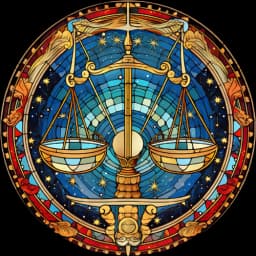
libra
Relational and aesthetic inspiration"Neptune in Libra seeks harmony, beauty, subtle fusion and the relational ideal. Here, being dreams of a refined, deep, inspired, almost immaterial bond. It can bring much gentleness, grace and listening, but also idealise the relationship or lose itself in the desire for a perfect love."
Strengths
- Grace
- Relational empathy
- Capacity to pacify
- Artistic or affective inspiration
Challenges
- Idealisation of the couple
- Difficulty seeing the reality of the bond
- Tendency to adapt too much
- Vagueness in commitments
Manifestations
- A strong aspiration to harmony in bonds
- Sensitivity to the beautiful, form, elegance, relational atmosphere
- Need for a soul bond or subtle resonance
- Refusal of overly raw relations
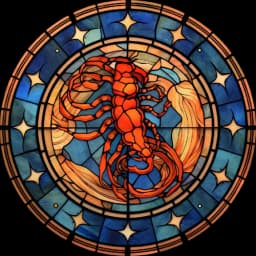
scorpio
Deep and magnetic inspiration"Neptune in Scorpio plunges into the deep waters of the psyche, mystery, fusion, crisis, desire and transformation. Here, sensitivity is intense, lucid at times, fascinated by the invisible hidden behind appearances. Being seeks a subtle but radical truth."
Strengths
- Magnetism
- Intuitive lucidity
- Depth
- Power of subtle transformation
Challenges
- Fascination with the troubled
- Destructive fusion
- Emotional dependences
- Difficulty distinguishing love from vertigo
Manifestations
- A taste for the intense, the secret, the unspoken, the mysterious
- Strong intuition in deep psychic or emotional zones
- Capacity to sense what is at play beneath the surface
- Need to live transformative experiences

sagittarius
Spiritual and visionary inspiration"Neptune in Sagittarius opens to the quest for meaning, faith, philosophy, the inner or outer journey, broad visions and symbolic horizons. Here, the ideal takes the form of a call toward something greater, further, truer. But the risk exists of adhering to great narratives without enough discernment."
Strengths
- Faith
- Inspired vision
- Spiritual openness
- Capacity to give breath
Challenges
- Credulity
- Idealistic dogmatism
- Projection onto an absolute
- Difficulty verifying beliefs
Manifestations
- A strong aspiration to a higher truth
- Need to believe, to understand, to broaden the horizon
- An imagination nourished by the symbolic, the spiritual, the elsewhere
- A taste for vast and inspiring visions
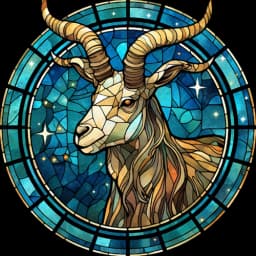
capricorn
Inspiration contained by structure"Neptune in Capricorn is in traditional fall. Here, the ideal, the vague and the invisible must compose with the demands of the real, of time, of responsibilities and of structures. The person may want to give a concrete form to a vision, but may also collide with a conflict between dream and materialisation."
Strengths
- Capacity to give body to a vision
- Inspired seriousness
- Silent endurance
- Embodied spirituality
Challenges
- Disillusion
- Conflict between ideal and reality
- Rigidification of the dream
- Difficulty letting inspiration breathe
Manifestations
- Need to concretise an ideal
- A more controlled, more restrained, more internalised sensitivity
- Questioning of the real meaning of structures and ambitions
- A subtle but tense relationship to success or authority
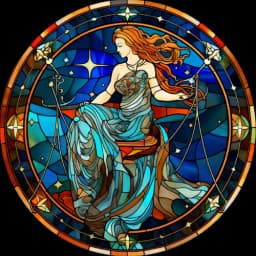
aquarius
Collective inspiration and vision of the future"Neptune in Aquarius seeks to connect the ideal, the collective, expanded consciousness, human networks and the intuition of changes of civilisation. Here, being feels the movements of the future, utopias, collective aspirations, sometimes with great finesse, sometimes with an idealisation of the group or of progress."
Strengths
- Collective vision
- Humanist inspiration
- Subtle mental openness
- Capacity to dream a different world
Challenges
- Utopianism
- Ideological vagueness
- Difficulty distinguishing the human ideal from the collective fantasy
- Emotional distance masked by the ideal
Manifestations
- Sensitivity to collective causes and great human movements
- An inspired vision of networks, progress, shared consciousness
- A taste for utopias, ideals of brotherhood or evolution
- Intuition of changes of society
pisces
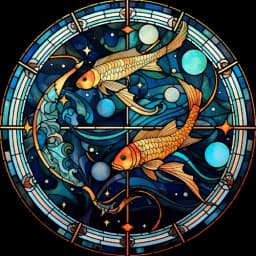
Oceanic and mystical inspiration"Neptune in Pisces is at home. There it fully expresses its nature: compassion, intuition, dream, fusion, the imaginary, faith, mystery, subtle resonance and the dissolution of borders. Here, being can capture the invisible very finely, feel deeply and love without a clear contour, with all the best and all the most fragile that this implies."
Strengths
- Compassion
- Deep faith
- Intuition
- Imagination
- Inspired presence
Challenges
- Vagueness
- Flight
- Excessive dissolution of limits
- Idealisation
- Difficulty keeping a sufficient anchoring
Manifestations
- Great psychic and emotional porosity
- Need for silence, poetry, reverie or spirituality
- Capacity to feel the atmospheres and inner states of others
- Search for a sensitive or mystical absolute
Neptune in the 12 astrological houses
The theatres of life where the body manifests.
Neptune in the First House
"Neptune in the First House makes the personality more porous, subtle, sensitive, inspired or hard to define clearly. The person picks up a great deal, feels a great deal and can give off a gentle, mysterious, shifting, sometimes elusive presence."
Potentials
- Intuition
- Gentle presence
- Empathy
- Personal inspiration
Shadow points
- Identity blur
- Excessive influence of the environment
- Difficulty setting clear contours
Manifestations
- A delicate, subtle or changing presence
- Great sensitivity to atmospheres and to others' projections
- A porous or inspired identity
- Need to connect to something vaster to feel alive
Neptune in the Second House
"Neptune in the Second House imbues the relationship to value, money, resources and self-esteem with idealism, vagueness or sensitivity. The person may have an inspired or detached relationship to matter, but also zones of confusion around concrete security."
Potentials
- Generosity
- Inspired values
- Capacity to create value differently
- Sensitivity to the beauty and meaning of things
Shadow points
- Financial vagueness
- Lack of material limits
- Difficulty concretising security
- Confusion between real value and ideal
Manifestations
- A subtle or changing relationship to money
- Values influenced by the ideal, aesthetics or compassion
- Difficulty at times in clearly evaluating what one is worth or possesses
- Need for a more inspired than purely utilitarian relationship to resources
Neptune in the Third House
"Neptune in the Third House colours the mind, language, studies and exchanges with intuition, imagination and subtlety. The person often thinks in images, picks up implications, feels atmospheres, but may also lack precision or structure in expression."
Potentials
- Mental imagination
- Poetry
- Intuition in communication
- Capacity to capture the invisible in daily life
Shadow points
- Intellectual vagueness
- Mental scattering
- Difficulty formulating clearly
- Tendency to confuse perception and certainty
Manifestations
- Intuitive or imaged thought
- Gentle, poetic or suggestive speech
- A taste for symbols, tales, the music of words
- Receptivity to implicit messages
Neptune in the Fourth House
"Neptune in the Fourth House touches roots, family, home and inner life with a sensitive, subtle, sometimes idealistic, sometimes troubled veil. The person often seeks a soul refuge, an inspired home, a gentle or sacred memory, but may also carry vagueness in the family history."
Potentials
- Intimate depth
- Inner gentleness
- Family compassion
- Capacity to create an enveloping atmosphere
Shadow points
- Vagueness in the foundations
- Idealisation of the family
- Difficulty seeing certain emotional inheritances clearly
Manifestations
- A rich, dreamy, deep inner life
- A sensitive or idealistic relationship to home and roots
- Need for a protective, poetic or soothing place
- A very strong emotional memory
Neptune in the Fifth House
"Neptune in the Fifth House inspires creativity, love, pleasure, self-expression and the relationship to the inner child. The person loves to dream, create, seduce, express themselves from a sensitive, poetic or imaginary vision, but may also idealise pleasure or the amorous bond."
Potentials
- Artistic inspiration
- Romanticism
- Capacity to touch the heart
- Poetry of expression
Shadow points
- Amorous idealisation
- Vagueness in desires
- Tendency to live in the image more than in the real
Manifestations
- Inspired or artistic creativity
- Need to live ideal or deeply romantic loves
- Sensitive, imaged, subtle expression
- A taste for magic, dream, beauty
Neptune in the Sixth House
"Neptune in the Sixth House imbues work, service, health, routines and daily life with a subtle, vague, sometimes sacrificial dimension. The person can be very devoted, inspired in help or care, but must learn to set limits in the useful and the daily."
Potentials
- Inspired service
- Concrete compassion
- Capacity to help finely
- Subtle care
Shadow points
- Vagueness in organisation
- Diffuse fatigue
- Excessive sacrifice
- Difficulty distinguishing what truly comes from oneself
Manifestations
- Strong sensitivity in work or service
- Need for meaning, gentleness or inspiration in daily life
- A porous relationship to the professional environment
- Intuition in care, help or small gestures
Neptune in the Seventh House
"Neptune in the Seventh House colours relationships, the couple, partnerships and contracts with ideal, fusion, projection, gentleness and sometimes vagueness. The person aspires to a deep, subtle, inspired soul relationship, but may also idealise the partner or lose themselves in the bond."
Potentials
- Relational empathy
- Gentleness
- Capacity to love with an open heart
- Sense of the subtle bond
Shadow points
- Projection
- Vagueness in commitments
- Difficulty seeing the partner's reality
- Excessive fusion
Manifestations
- Need for an inspired or spiritual relationship
- Great sensitivity to the other's expectations and states
- Tendency to idealise the partner or the bond
- Search for a deep harmony
Neptune in the Eighth House
"Neptune in the Eighth House plunges into the psychic depths, fusion, intimacy, crises, losses, shared resources and mysteries. The person may intensely experience invisible passages, silent transformations, karmic bonds or deep psychic states."
Potentials
- Intuitive depth
- Capacity for subtle transformation
- Psychic lucidity
- Openness to mystery
Shadow points
- Confused fusion
- Dependences
- Difficulty discerning in intense bonds
- Trouble in the face of loss or abandonment
Manifestations
- Very strong sensitivity to fusional bonds and hidden dynamics
- Intuition in crises or transformation zones
- A subtle relationship to losses, secrets, passages
- Attraction to mystery and the depths
Neptune in the Ninth House
"Neptune in the Ninth House opens to a spiritual, philosophical, symbolic or mystical quest for meaning. The person seeks an inspired truth, a vast vision, a faith or an understanding of the world that goes beyond purely rational frameworks."
Potentials
- Faith
- Spiritual openness
- Subtle vision
- Capacity to give breath
Shadow points
- Credulity
- Doctrinal idealisation
- Difficulty distinguishing faith and projection
- Philosophical vagueness
Manifestations
- Need to believe or feel a greater meaning
- A taste for spirituality, the symbolic, the inner journey
- A worldview nourished by intuition or the ideal
- Aspiration to an inspiring truth
Neptune in the Tenth House
"Neptune in the Tenth House acts on vocation, career, public image, status and the relationship to success. The person often seeks an inspired, useful, artistic, caring or spiritual path, but may also experience vagueness in their social direction or image."
Potentials
- Inspired vocation
- Subtle radiance
- Capacity to touch collectively
- Sense of service or beauty
Shadow points
- Professional vagueness
- Career disillusion
- Difficulty defining a clear place
- Projection onto an ideal success
Manifestations
- Need for deep meaning in vocation
- A subtle, gentle, inspiring or hard-to-fix public image
- Attraction to artistic, helping or consciousness paths
- A vague or shifting relationship to social success
Neptune in the Eleventh House
"Neptune in the Eleventh House colours groups, friendships, causes, collective projects and the vision of the future with idealism, compassion, utopia or collective resonance. The person often dreams of a more united, gentler, more inspired world."
Potentials
- Collective inspiration
- Social empathy
- Capacity to dream together
- Openness to human ideals
Shadow points
- Utopia
- Vagueness in alliances
- Friendly disappointments linked to idealisation
- Difficulty discerning the real intentions of groups
Manifestations
- Sensitivity to collective and human causes
- An ideal of friendship or brotherhood
- A taste for projects bearing meaning or inspiration
- A vision of the future nourished by hope
Neptune in the Twelfth House
"Neptune in the Twelfth House is particularly powerful in the domain of the unconscious, withdrawal, spirituality, silence, dream, mystery and the invisible worlds. The person may have an immense inner life, a deep intuition, a natural bond to the invisible, but also a strong vulnerability to confusion or escape."
Potentials
- Inner mysticism
- Deep compassion
- Intuition
- Capacity for subtle healing
- Silent faith
Shadow points
- Escapism
- Psychic vagueness
- Difficulty distinguishing what comes from oneself and what comes from outside
- Tendency to dissolve into withdrawal or the imaginary
Manifestations
- A very rich and very subtle inner life
- A taste for silence, solitude, contemplation or dream
- Receptivity to invisible or symbolic dimensions
- Need to withdraw periodically to find oneself
The aspects of Neptune to the other planets


Neptune – Sun
The Neptune–Sun relationship speaks of inspiration, ideal, subtle sensitivity, inner radiance, but also possible identity blur. It shows how identity connects to the invisible, to dream, to compassion or to an ideal greater than itself.
Neptune conjunct the Sun gives an inspired sensitivity, a strong imagination, a great receptivity and often a need to live according to an ideal. It can also make identity vaguer, more porous or harder to define clearly.
Neptune sextile Sun favours inspiration, gentleness, subtle creativity, intuition and a capacity to radiate with delicacy and depth.
Neptune square Sun can create identity confusion, a difficulty clearly embodying one's will, ideal projections or a gap between what one dreams of being and what one concretely is.
Neptune trine Sun gives an inspired, intuitive, gentle quality of presence, often artistic or spiritual, and a capacity to live in accord with an inner ideal.
Neptune opposed Sun places the centre of being and the ideal in tension, with a risk of projection, disillusion, relational vagueness or a temporary loss of personal contour.
Neptune – Moon
The Neptune–Moon relationship speaks of sensitivity, emotional receptivity, affective fusion, the intimate imaginary and porosity to atmospheres. It shows how the emotional world connects to the subtle and the unspoken.
Neptune conjunct the Moon gives a very great sensitivity, a deep empathy, a rich imaginary life and a receptivity to atmospheres. It can also accentuate hypersensitivity, affective confusion or the difficulty of setting emotional limits.
Neptune sextile Moon favours gentleness, emotional intuition, compassion, delicacy and a beautiful quality of inner resonance.
Neptune square Moon can produce emotional vagueness, affective idealisation, a difficulty knowing what one really feels or a tendency to let oneself be overwhelmed by the atmosphere.
Neptune trine Moon gives an inspired sensitivity, a great inner richness, a fitting affective intuition and a capacity to love with gentleness.
Neptune opposed Moon often places the need for emotional security and the call of fusion in tension, with a risk of projection, confusion or affective disappointment.

Neptune – Mercury
The Neptune–Mercury relationship speaks of imaged thought, mental intuition, poetry, inspiration in language, but also possible vagueness in reasoning or expression.
Neptune conjunct Mercury gives an imaginative, intuitive, symbolic mind, often poetic or inspired. It can also produce a vague, suggestible mind hard to structure clearly.
Neptune sextile Mercury favours imagination, subtlety of expression, fine listening, intellectual inspiration and the capacity to perceive beyond words.
Neptune square Mercury can create mental confusion, misunderstandings, projections, a difficulty distinguishing intuition, fear and interpretation.
Neptune trine Mercury gives a beautiful mental inspiration, a poetic intelligence, subtle speech and a good capacity to connect language and the imaginary.
Neptune opposed Mercury places rational thought and diffuse perception in tension, with a risk of vagueness, involuntary untruth or difficulty clarifying what is perceived.

Neptune – Venus
The Neptune–Venus relationship speaks of idealised love, romanticism, compassion, aesthetic or affective fusion, and a subtle relationship to pleasure and beauty.
Neptune conjunct Venus amplifies romanticism, sensitivity to the beautiful, the need for gentle fusion, compassion and the desire for an inspired love. It can also accentuate idealisation, affective dependence or amorous disappointments.
Neptune sextile Venus favours grace, relational delicacy, artistic inspiration, subtle love and a beautiful opening of the heart.
Neptune square Venus can create affective illusions, unrealistic expectations, a tendency to lose oneself in the bond or to confuse love, rescue and projection.
Neptune trine Venus gives gentleness, relational poetry, subtle charm, artistic sense and a capacity to love with great delicacy.
Neptune opposed Venus places the need for love and the ideal of fusion in tension, with a risk of disappointment, relational vagueness or attraction to elusive bonds.

Neptune – Mars
The Neptune–Mars relationship speaks of inspired action, subtle energy, idealised motivation, the desire to serve or to act for a cause, but also possible confusion in the impulse.
Neptune conjunct Mars gives an inspired energy, an ideal motivation, a capacity to act through intuition or compassion. It can also produce a difficulty channelling the will, diffuse fatigue or vagueness in action.
Neptune sextile Mars favours a subtle, inspired, intuitive, creative or devoted action, with a good capacity to act without brutality.
Neptune square Mars can create a conflict between the desire to act and vagueness of motivation, with a risk of scattering, avoidance, self-deception or poorly directed action.
Neptune trine Mars gives inspiration in action, a fitting intuition of the moment, gentle combativeness and a capacity to act for what has meaning.
Neptune opposed Mars places will and inspiration, action and passivity, personal desire and the call of sacrifice or fusion in tension.
Neptune – Jupiter
The Neptune–Jupiter relationship speaks of faith, ideal, spirituality, moral vision, mystical momentum and the relationship to meaning. It can be very inspiring or very inflationary.
Neptune conjunct Jupiter amplifies the ideal, faith, spiritual aspiration, compassion and the quest for meaning. It can also produce credulity, an inflation of hope or an excessive idealism.
Neptune sextile Jupiter favours subtle faith, spiritual inspiration, openness to something greater than oneself and a generous vision of existence.
Neptune square Jupiter can create excesses of belief, projection, moral idealism or confidence in unverified promises.
Neptune trine Jupiter gives an inner breath, an inspired faith, a deep generosity and a beautiful openness to spirituality or the symbolic imaginary.
Neptune opposed Jupiter places faith and discernment, ideal and reality, expansion and dissolution in tension, with a risk of disillusion or ill-founded belief.

Neptune – Saturn
The Neptune–Saturn relationship speaks of the encounter between vagueness and structure, ideal and reality, dissolution and framework. It shows how to give form to the subtle or how to suffer from a conflict between dream and constraint.
Neptune conjunct Saturn associates inspiration and structure. It can give an inner depth, a capacity to embody a vision, but also a feeling of diffuse heaviness or a difficulty reconciling dream and reality.
Neptune sextile Saturn helps to give form to inspiration, to structure sensitivity, to make the ideal livable and to articulate subtlety and discipline.
Neptune square Saturn can create disillusions, a tension between the need for a framework and the aspiration to dissolve, or an impression that the real stifles the dream.
Neptune trine Saturn gives depth, wisdom, a capacity to embody the subtle, to build with gentleness and to make intuition more reliable.
Neptune opposed Saturn often places control and surrender, reality and ideal, structure and dissolution in tension, with a strong stake of discernment.

Neptune – Uranus
The Neptune–Uranus relationship speaks of visionary intuition, subtle awakening, changes of consciousness, collective inspiration and openness to new dimensions.
Neptune conjunct Uranus associates subtle perception, visionary intuition, imagination of the future and sensitivity to deep mutations. It can also make it difficult to channel these perceptions.
Neptune sextile Uranus favours innovative inspiration, awareness of subtle changes and a creative intuition of evolutions to come.
Neptune square Uranus can create a tension between intuition and instability, vision and confusion, aspiration to freedom and difficulty in clarifying it.
Neptune trine Uranus gives a visionary sense, modern intuition, creative inspiration and a capacity to accompany changes of consciousness.
Neptune opposed Uranus places dissolution and rupture, inspiration and the unexpected, collective dream and the necessity of awakening in tension.
Neptune – Pluto
The Neptune–Pluto relationship speaks of invisible depth, spiritual or psychic transformation, mystery, the dissolution of old inner worlds and symbolic power.
Neptune conjunct Pluto gives an extreme depth, an intuition of the hidden, an attraction to mystery and a strong potential for inner transformation. It can also accentuate vague shadow zones or fascinations hard to illuminate.
Neptune sextile Pluto favours a subtle transformation, an intuitive depth, a great symbolic richness and a capacity to evolve inwardly.
Neptune square Pluto can produce confused crises, fascinations, invisible fears, intense projections or deep dissolutions hard to understand.
Neptune trine Pluto gives power of perception, spiritual depth, a capacity to accompany psychic mutations and a great intelligence of mystery.
Neptune opposed Pluto often places surrender and control, dissolution and intensity, inspiration and the deep forces of transformation in tension.
Frequently asked questions about Neptune in astrology
What does Neptune represent in astrology?+
Neptune is a transpersonal planet of inspiration, dissolution and openness to the invisible. Its keyword is "To inspire". It symbolises the imaginary, compassion, the ideal and the mystical quest.
Is Neptune linked to spirituality?+
Yes, Neptune is the planet of spirituality, the mystical and transcendence. It opens to subtle dimensions, but can also lead to illusion, confusion or flight from the real.
What is the domicile of Neptune?+
The domicile of Neptune is Pisces, the sign of universal sensitivity, compassion and the dissolution of borders. This modern attribution complements that of Jupiter, the traditional ruler.
How to interpret Neptune in a natal chart?+
Neptune in a sign indicates the ideal of a generation. In a house, it shows the area where one seeks inspiration or risks confusion. Its aspects reveal sensitivity and intuition.
Does Neptune make things vague in a chart?+
Neptune dissolves clear contours and can create vagueness, idealisation or confusion. Its revolution of 165 years makes it a subtle influence that blurs bearings but opens to intuition.